Inspired by It’s a Wonderful Life
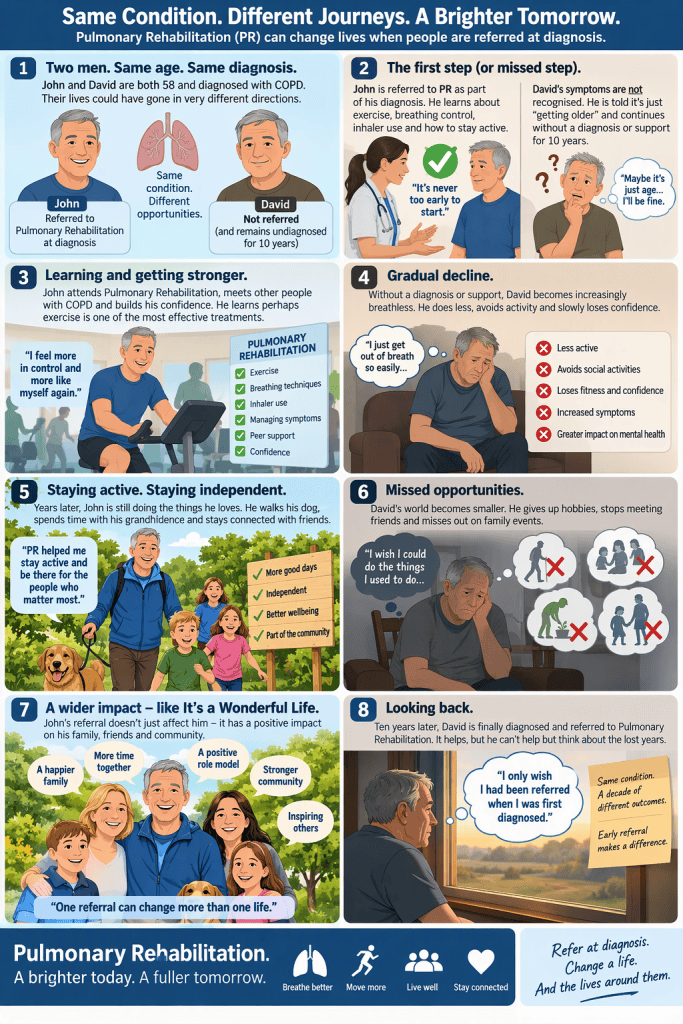
John and David were both diagnosed with COPD at age 58.
They lived on the same street. Both had worked hard all their lives. Both enjoyed walking their dogs, playing with their grandchildren, and meeting friends at the local café.
The difference between them began with a simple decision made on the day of diagnosis.
John’s Story: The Referral That Changed Everything
When John’s GP entered his COPD diagnosis, a prompt appeared:
“Pulmonary Rehabilitation Referral”
The referral was completed automatically.
At first, John wasn’t sure he needed it.
“I’m only a bit breathless,” he said.
But he attended.
There he learned about breathing control, exercise, pacing, inhaler use and how to stay active. He met other people living with COPD and realised he was not alone.
Over the next few years, John continued walking every day. When his breathlessness worsened, he knew what to do. He kept exercising, recognised signs of flare-ups, and sought help early.
He remained independent.
At his granddaughter’s sports day, he stood at the finish line cheering.
At family holidays, he walked the seafront.
When friends withdrew from activities because of breathlessness, John encouraged them to stay active.
The benefits spread beyond John himself.
His wife worried less.
His children saw him remain confident and engaged.
His grandchildren knew him as the grandad who always came to their events.
Like George Bailey in It’s a Wonderful Life, John never fully realised how many lives were positively affected by one seemingly small event years earlier.
David’s Story: The Referral That Never Came
Now imagine the same story, but without that referral.
David left his diagnosis appointment with inhalers but no discussion about Pulmonary Rehabilitation.
Nobody referred him.
No one explained that exercise was one of the most effective treatments available.
Over the years, he became increasingly breathless.
To avoid symptoms, he gradually did less.
He stopped walking to the shops.
Then he stopped gardening.
Then he stopped meeting friends.
The less he did, the less he felt able to do.
By the time Pulmonary Rehabilitation was finally mentioned ten years later, he wished someone had told him sooner.
“Why didn’t I know about this when I was first diagnosed?”
PR still helped him. It improved his confidence and fitness.
But by then he reflected on a decade of missed opportunities.
Family days he had sat out.
Walks he had avoided.
Activities he had given up believing decline was inevitable.
Like George Bailey seeing what life would have been like had he never existed, David could suddenly see the difference Pulmonary Rehabilitation might have made if it had been part of his care from the beginning.
The Lesson
In It’s a Wonderful Life, George discovers that one life can influence countless others.
Pulmonary Rehabilitation can have the same effect.
A referral is not simply an appointment.
It can mean:
- More years of independence.
- Greater confidence managing breathlessness.
- Fewer avoidable exacerbations.
- More participation in family life.
- Better physical and mental wellbeing.
The real tragedy is not when someone declines Pulmonary Rehabilitation.
The tragedy is when someone never gets the opportunity.
That is why Pulmonary Rehabilitation should be a routine part of COPD diagnosis, with clinicians actively opting patients out rather than relying on remembering to opt them in.
Because ten years later, too many patients are still saying:
“I only wish someone had referred me when I was first diagnosed.”
#WorldCOPDDay #PulmonaryRehabilitation #PulmonryRehab


